 M1ndseye
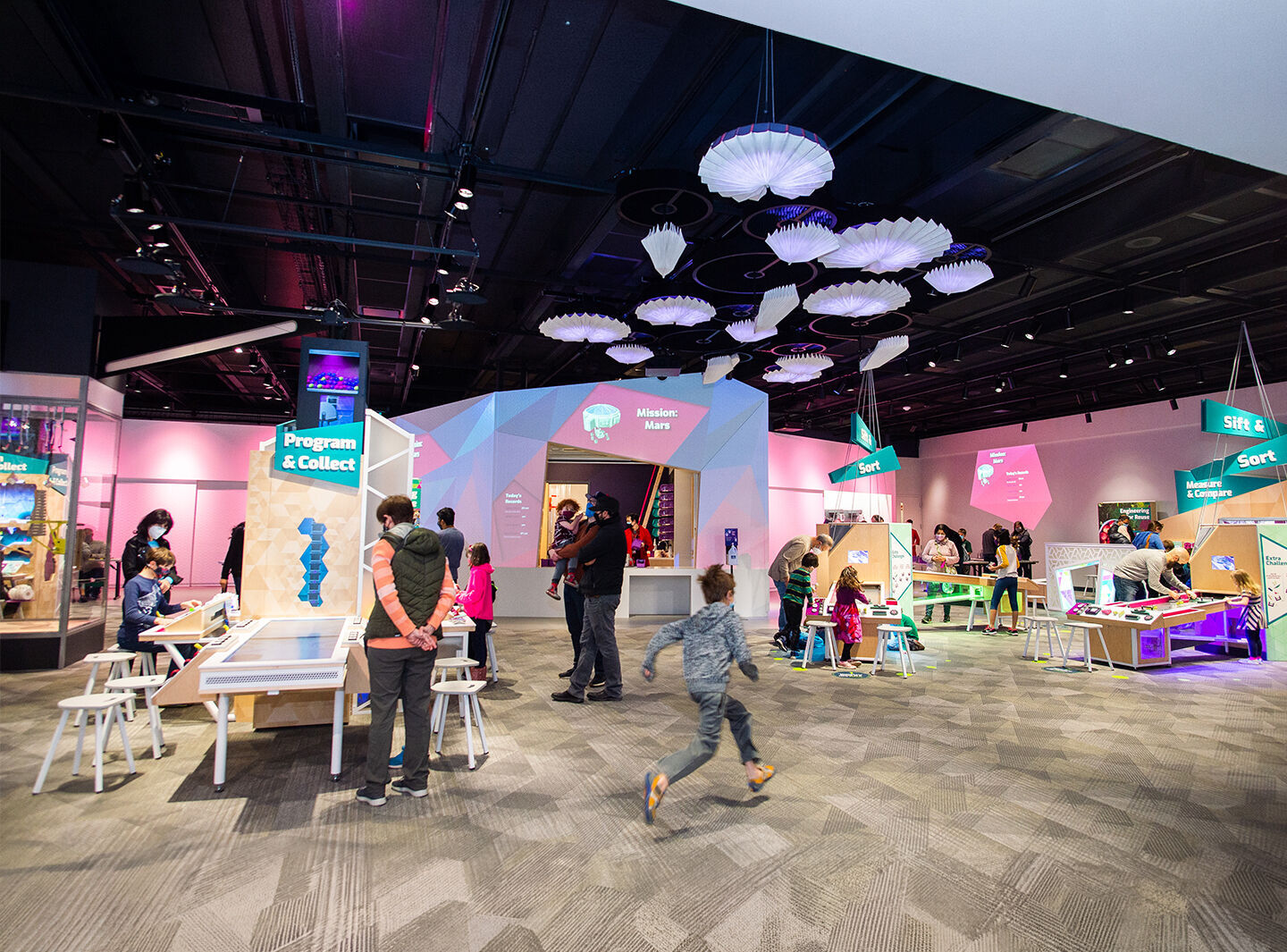
Museum of Science Boston · Engineering Design Workshop
Designing an engineering experience for every kind of learner.
I was part of an eight-person multidisciplinary team that brought a new hands-on engineering and computer science exhibition to life. The work combined environmental graphics, interactive systems, prototyping, digital content, fabrication, testing, and universal design to make complex STEM concepts intuitive, inclusive, and engaging.
The guiding principle
Bring complex ideas to life through universal design.
Every design decision was evaluated through the lens of accessibility, comprehension, durability, and play. We reduced unnecessary language, used visual instruction wherever possible, tested physical interactions repeatedly, and created multiple ways for guests of different ages and abilities to participate.
The facade
Safety, structure, visibility, and visual impact had to coexist.
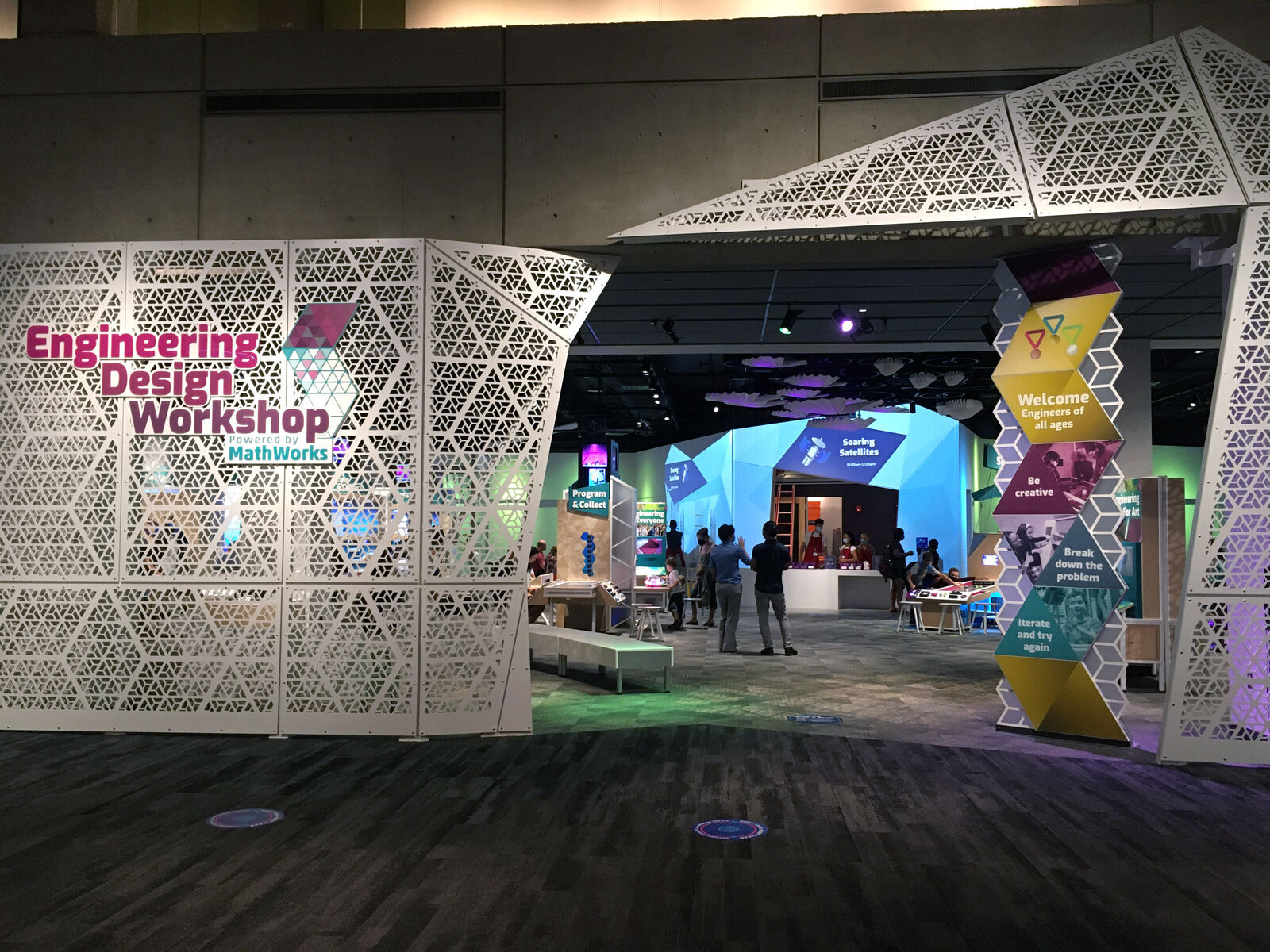
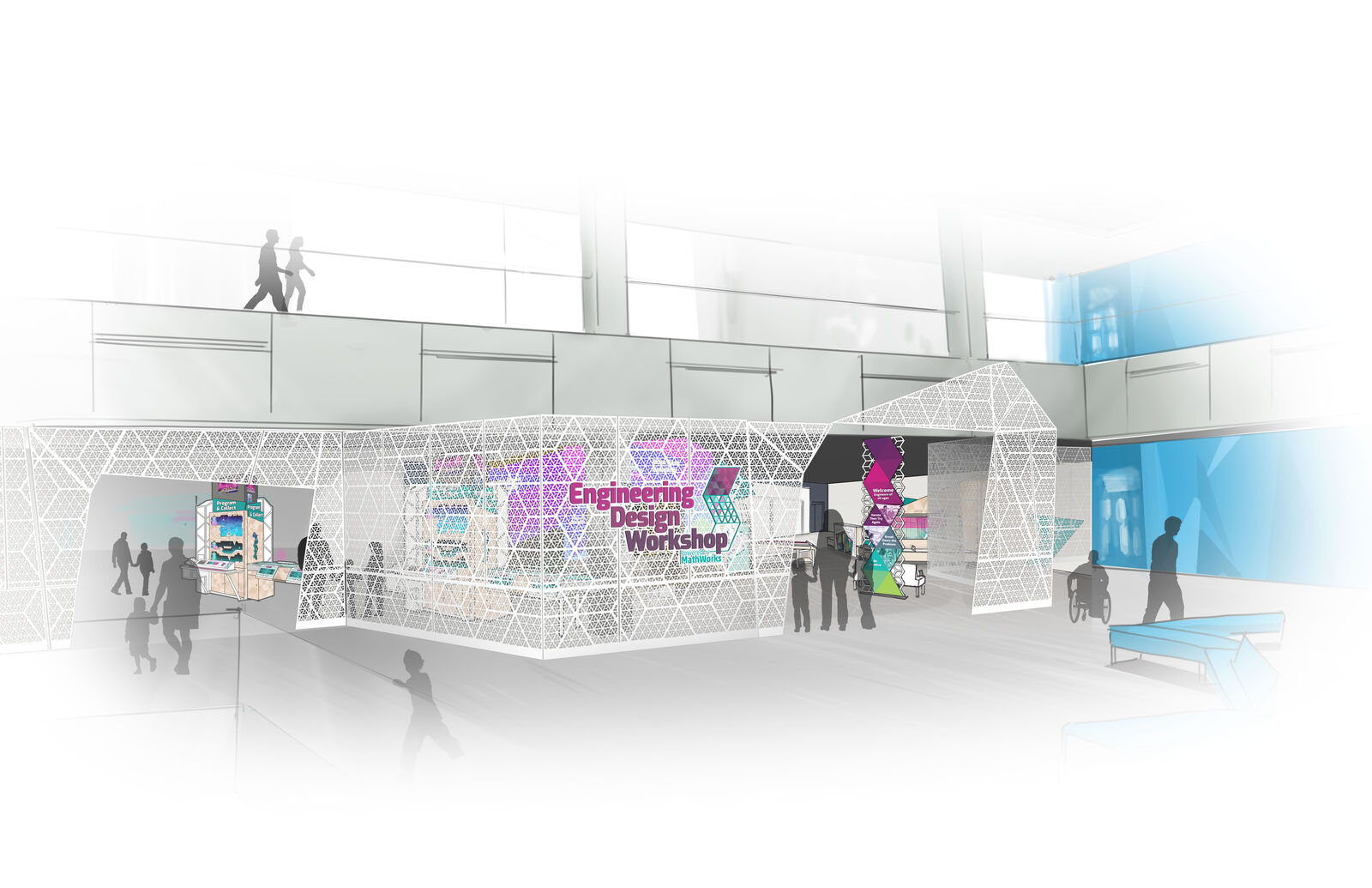
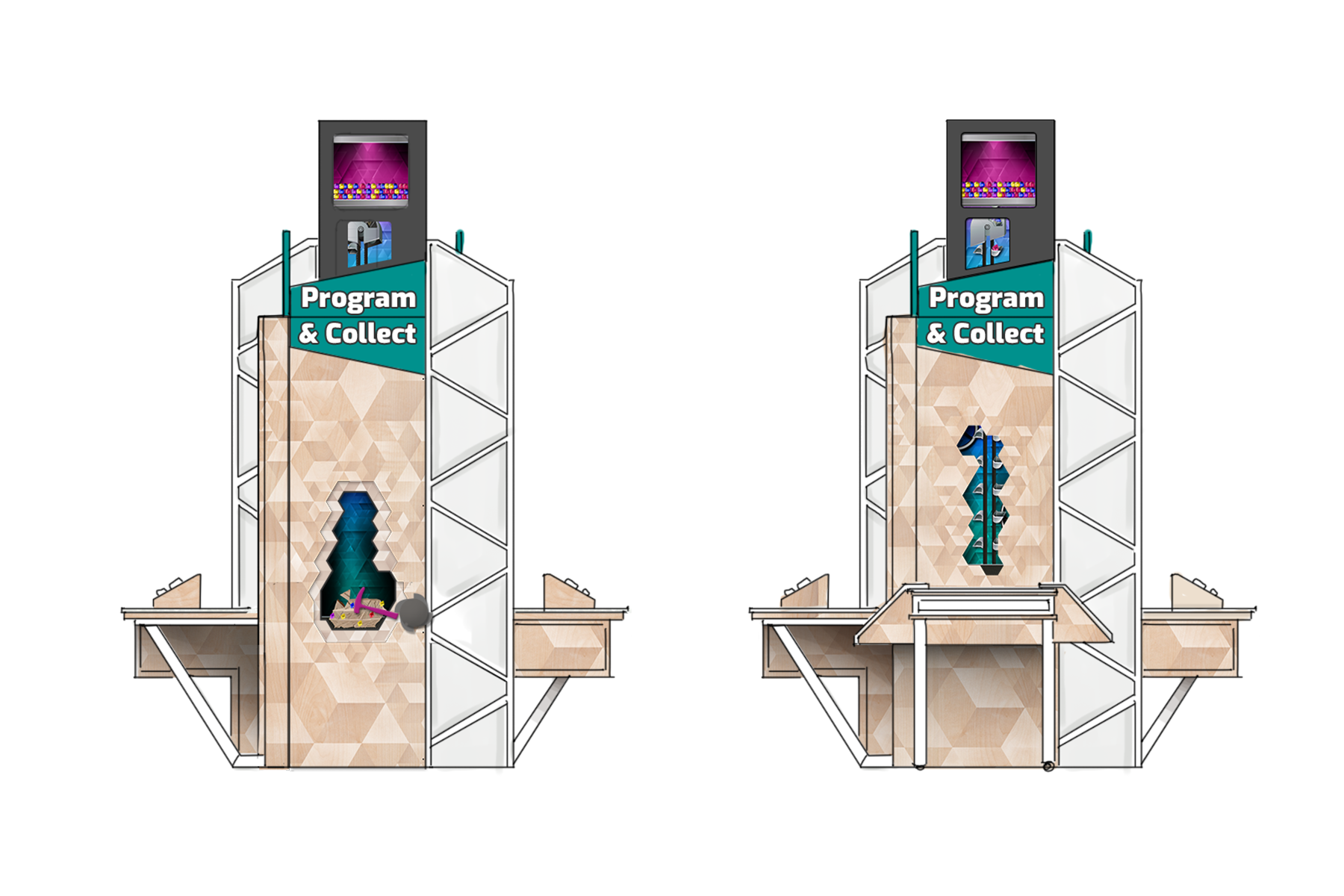
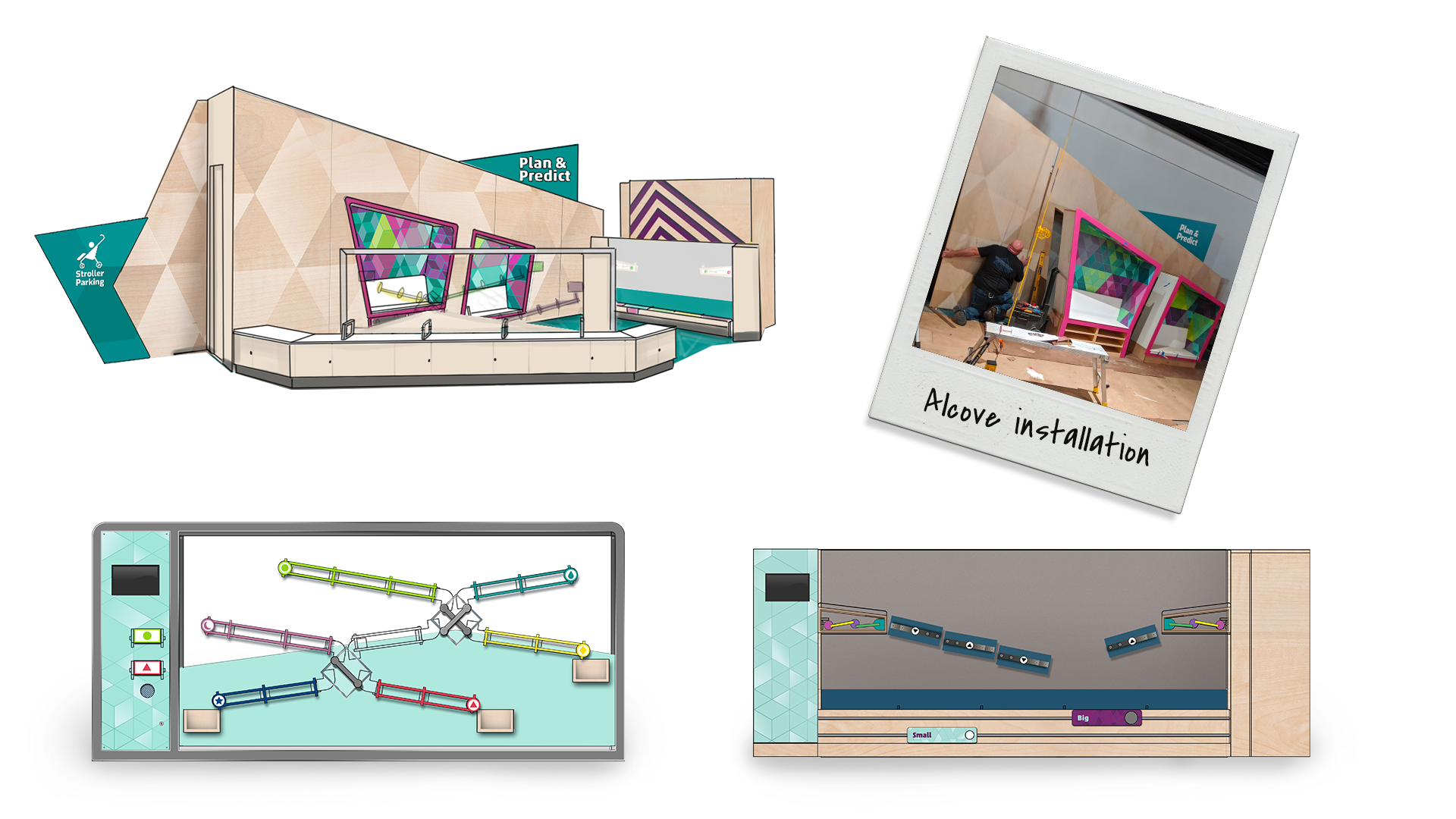
The facade was fabricated from densely laminated paper, requiring a pattern that balanced aesthetics, climb resistance, visibility, complexity, and structural integrity. An early approved design met the visual goals but failed structural testing. Through iterative refinement, the final pattern exceeded the required 350-pound load test and ultimately surpassed the capacity of the testing equipment.
Textures & colors
A system designed to make STEM feel open to everyone.
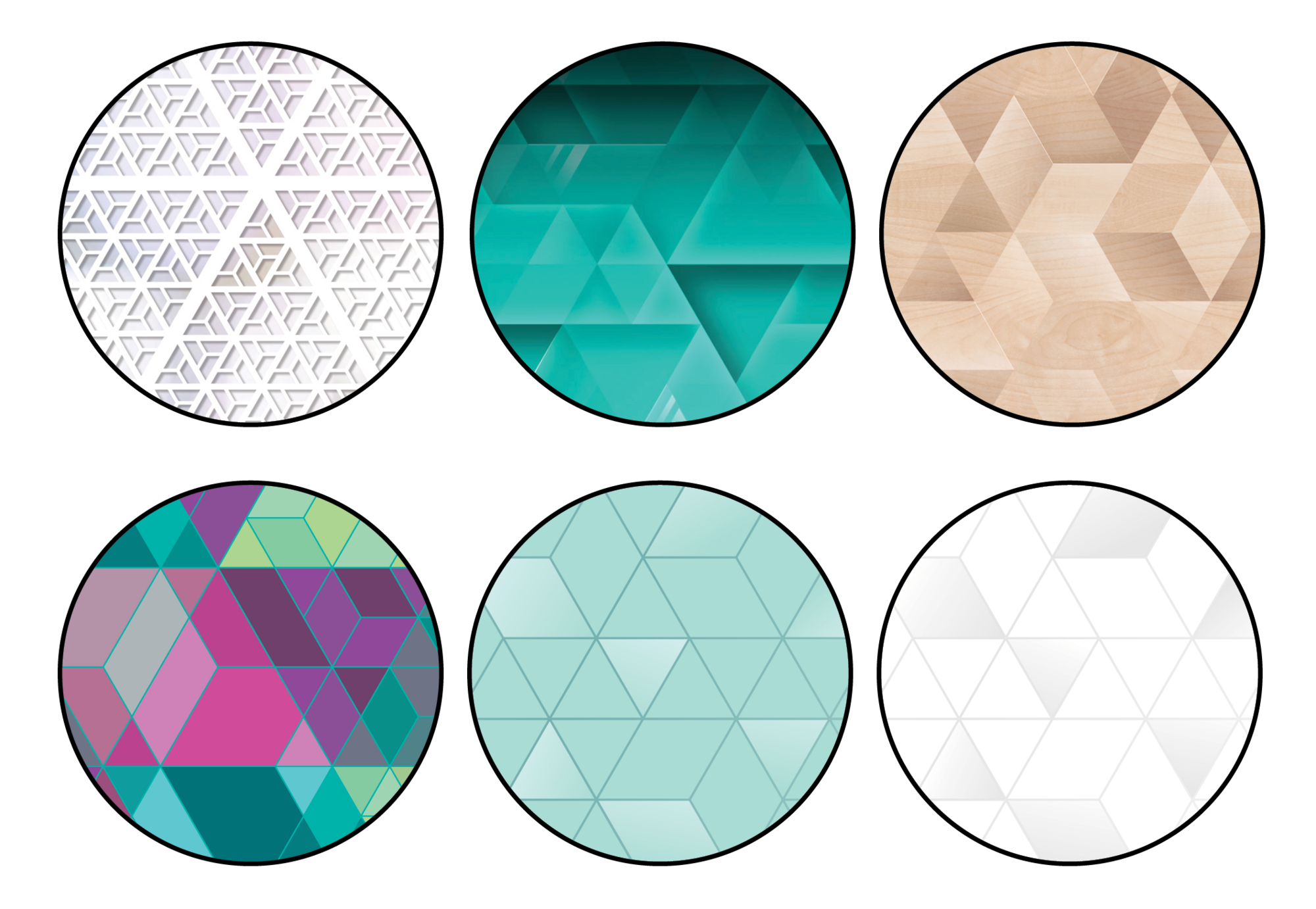
The palette was intentionally developed to support gender inclusivity across engineering and computer science experiences. Because the exhibition used many substrates, the system had to remain consistent across print, paint, powder coat, plastics, fabricated Delrin parts, and digital interfaces.
Universal design
Accessibility was not a feature. It was the design system.
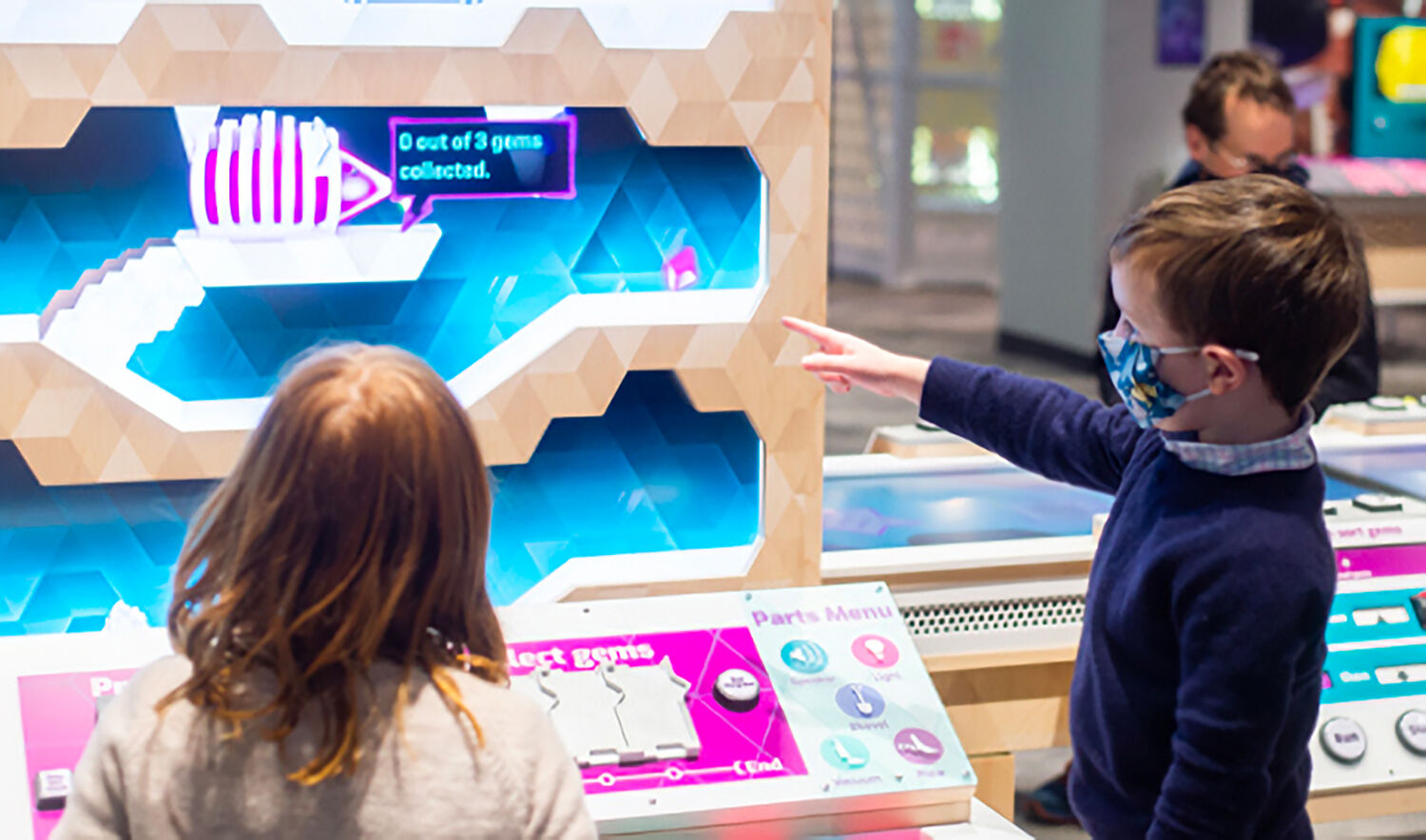
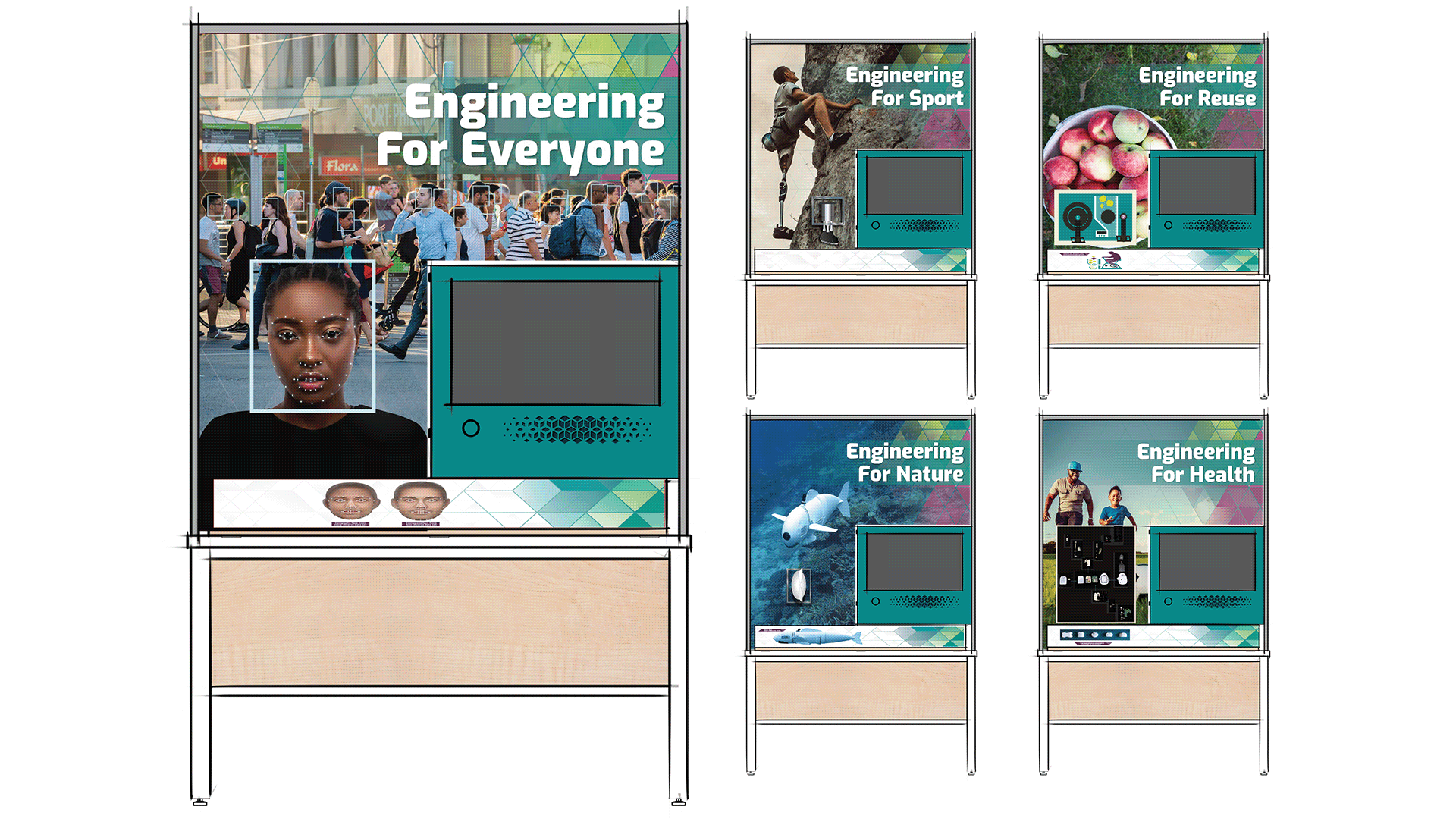
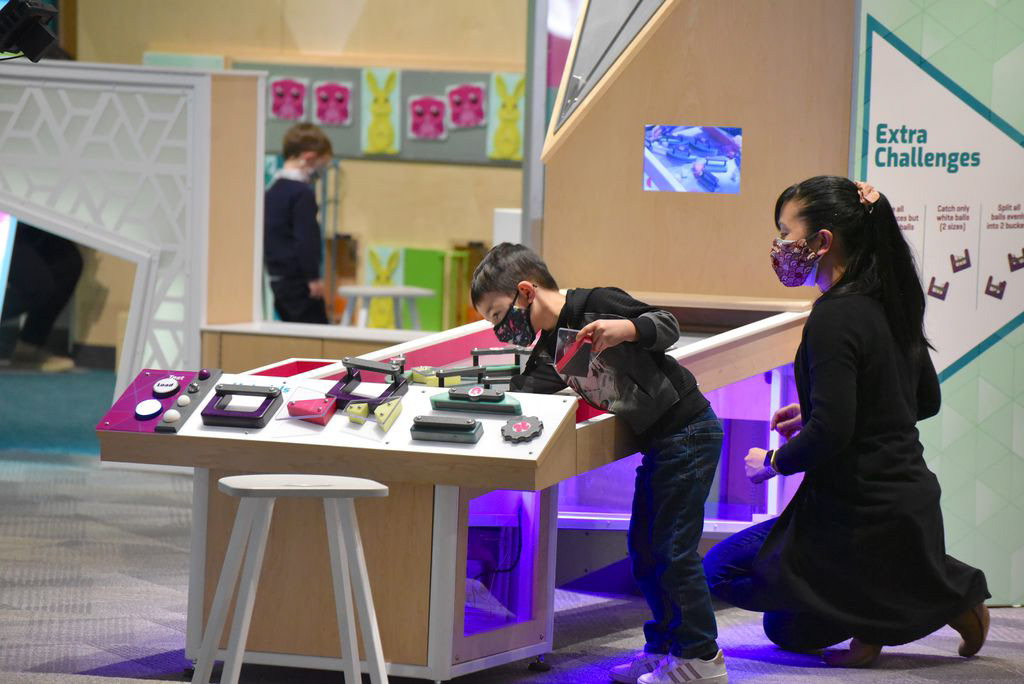
We intentionally used as few words as possible so more guests could immediately understand and participate. Tutorial monitors, tactile cues, visual instruction, and repeated usability testing worked together rather than relying on one mode of communication.
Program & Collect
A 360° physical-digital system where every side contributes.
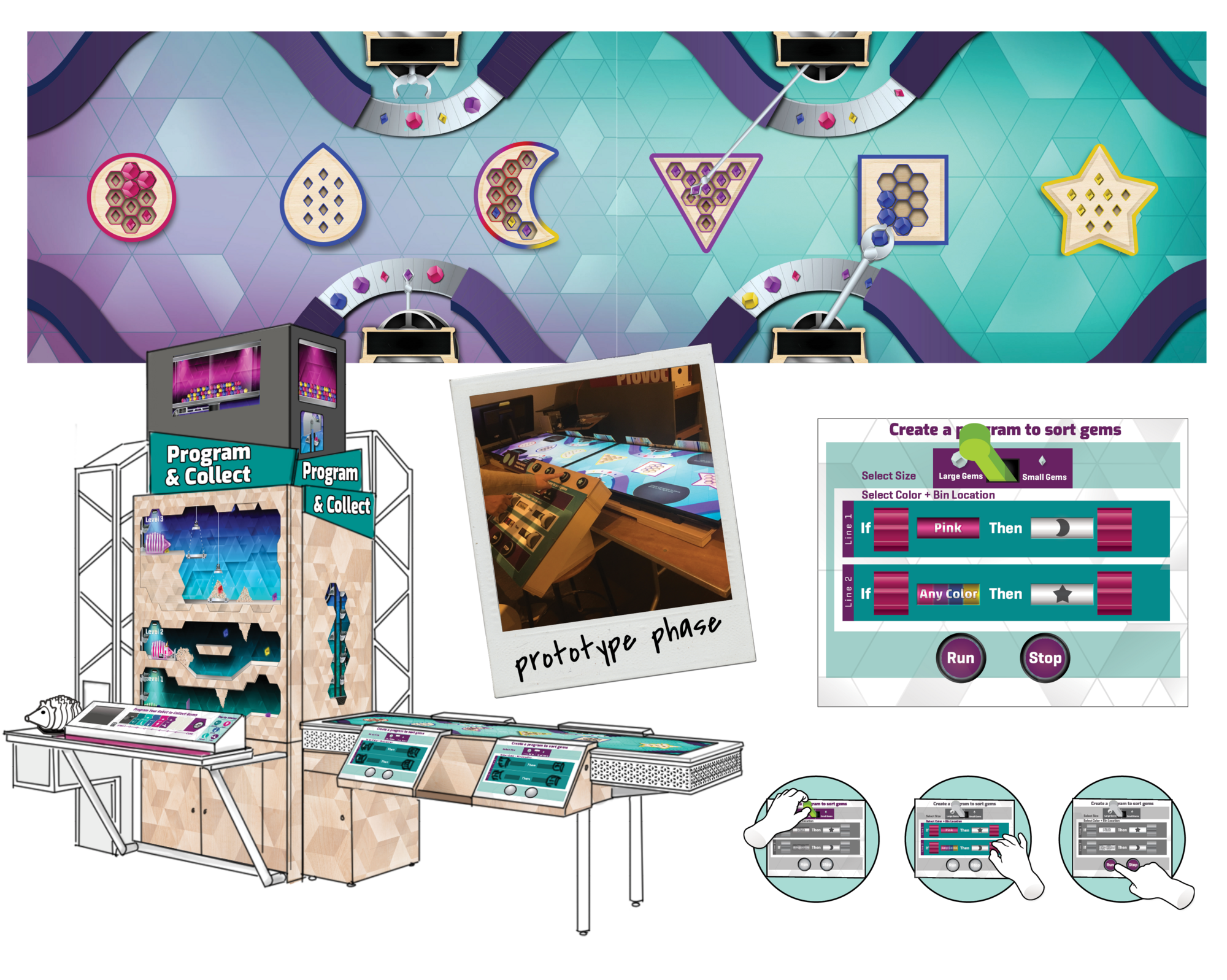
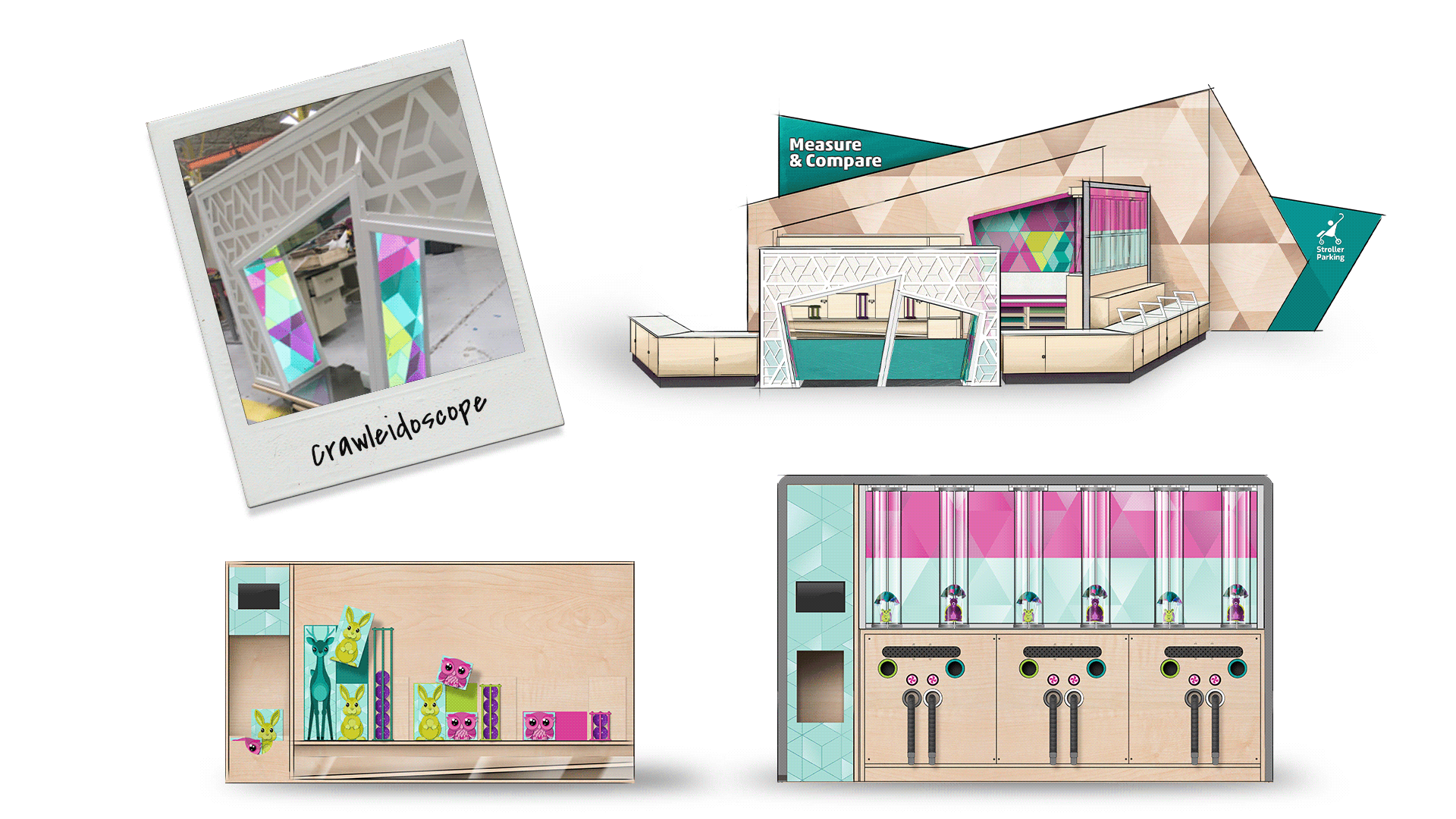
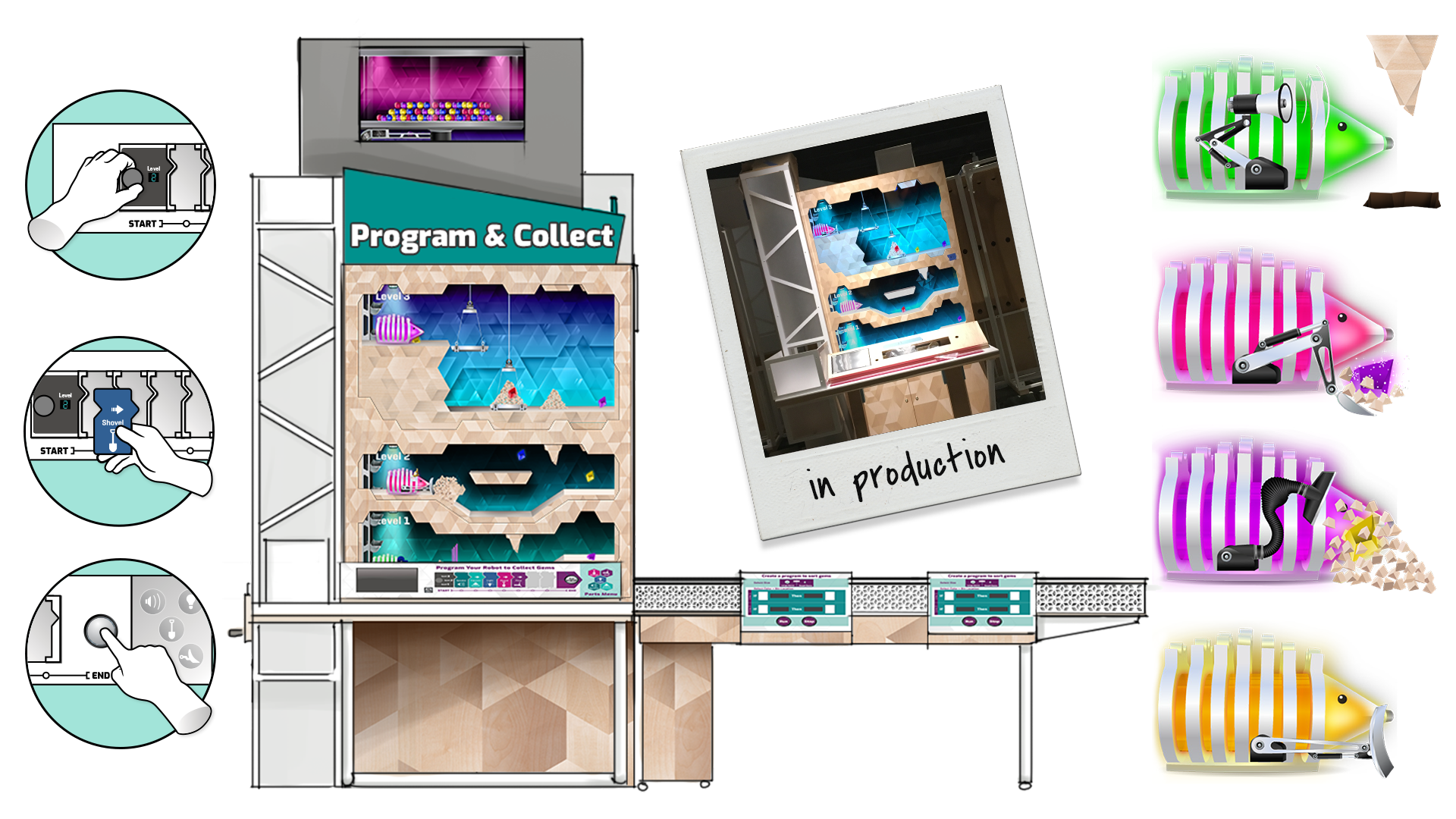
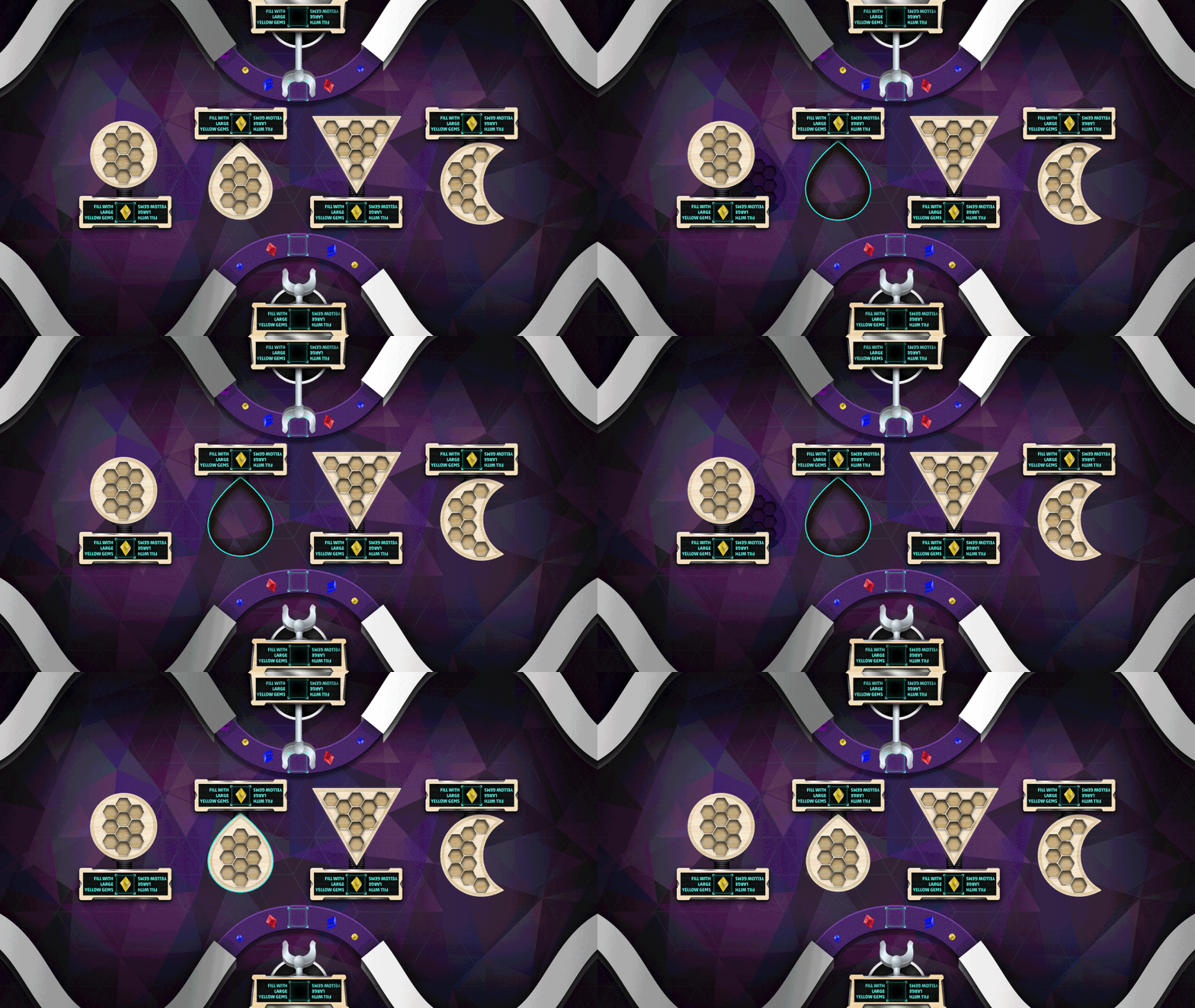
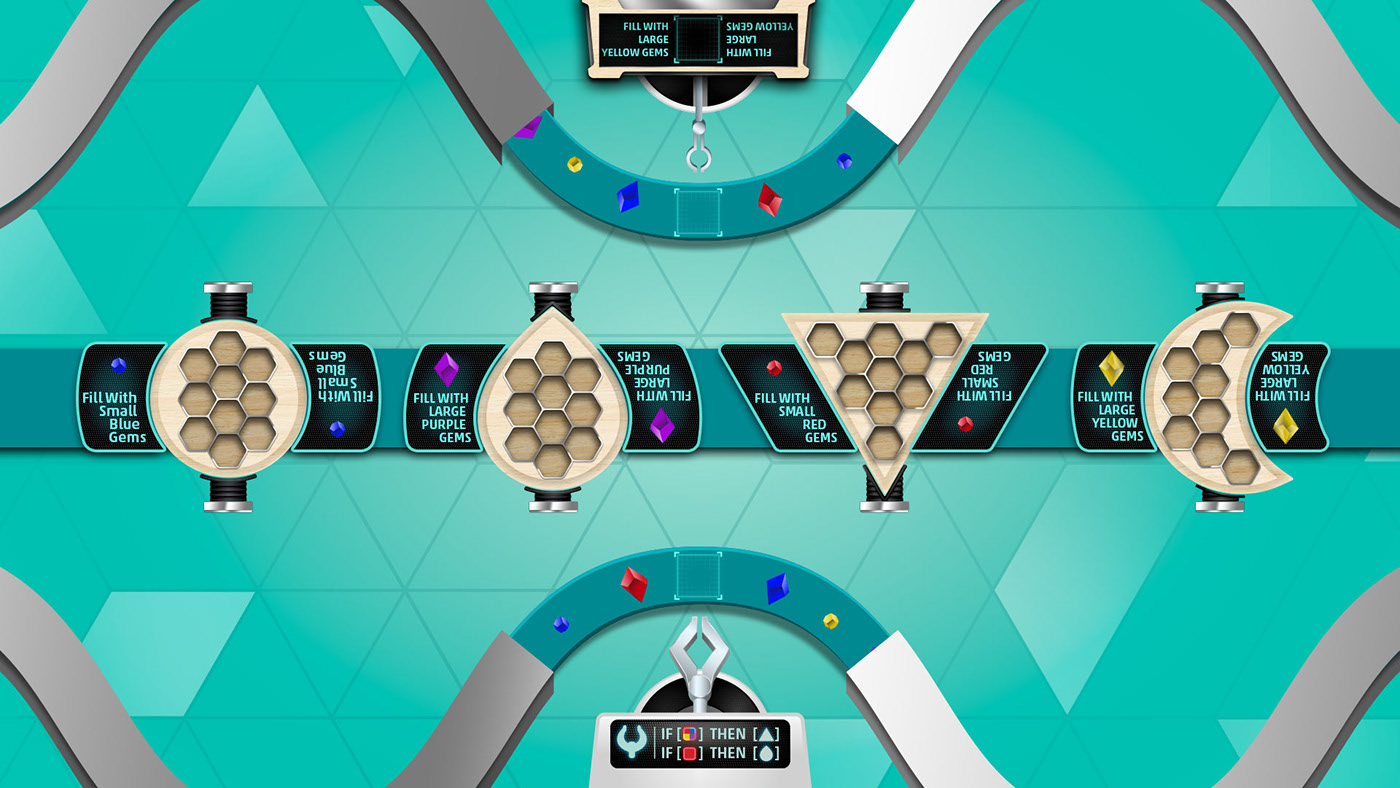
Program & Collect was one of four self-guided activities. Each station contributed toward a shared medium win displayed at the top of the component, so the physical architecture, printed prompts, digital screens, programming icons, and shared feedback all had to work as one system.
Raised programming icons made the interface more accessible to visually impaired guests and went through multiple rounds of testing before the final design was approved.
Gem Hopper evolution
Research changed the interaction — and the design got better.
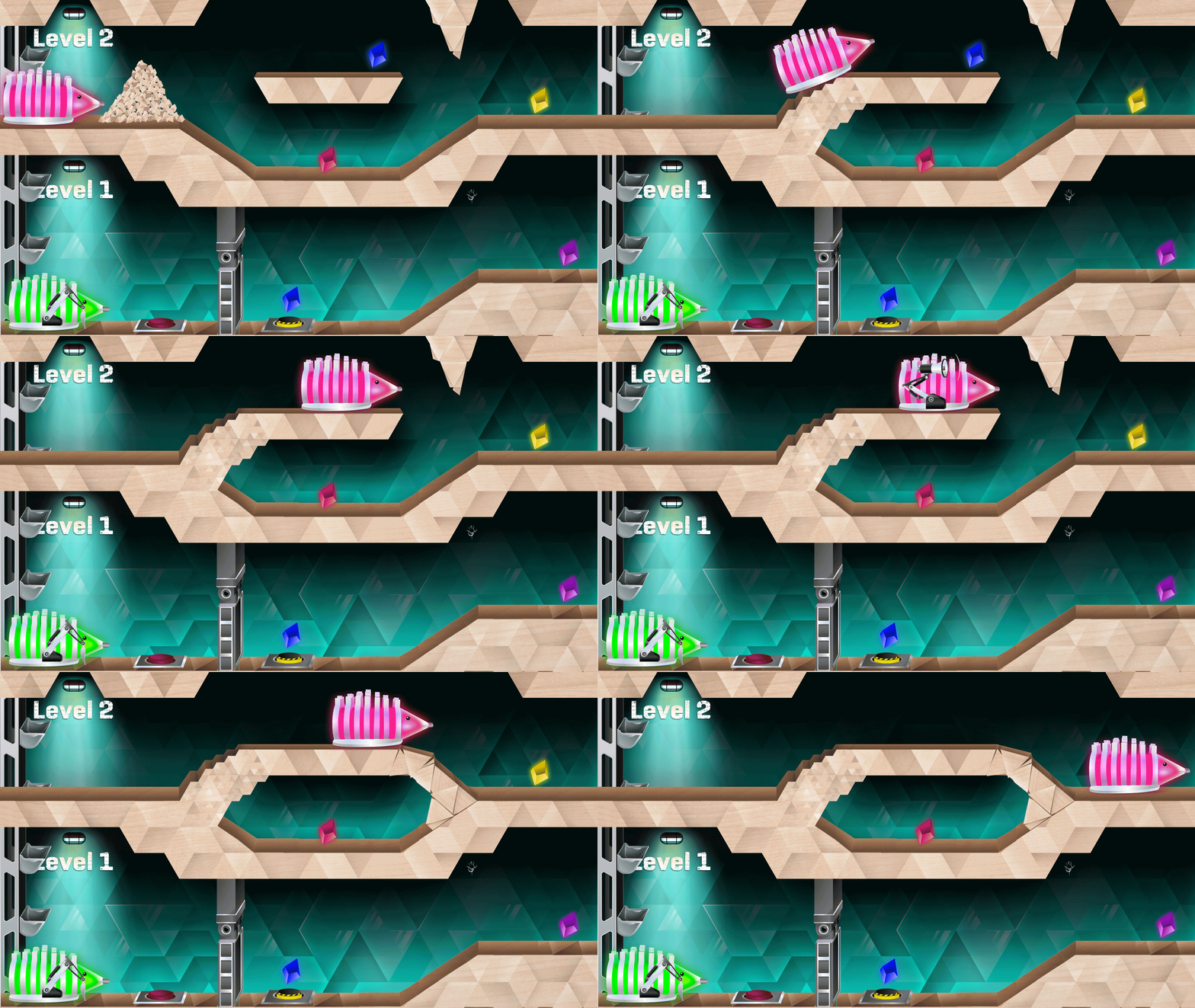
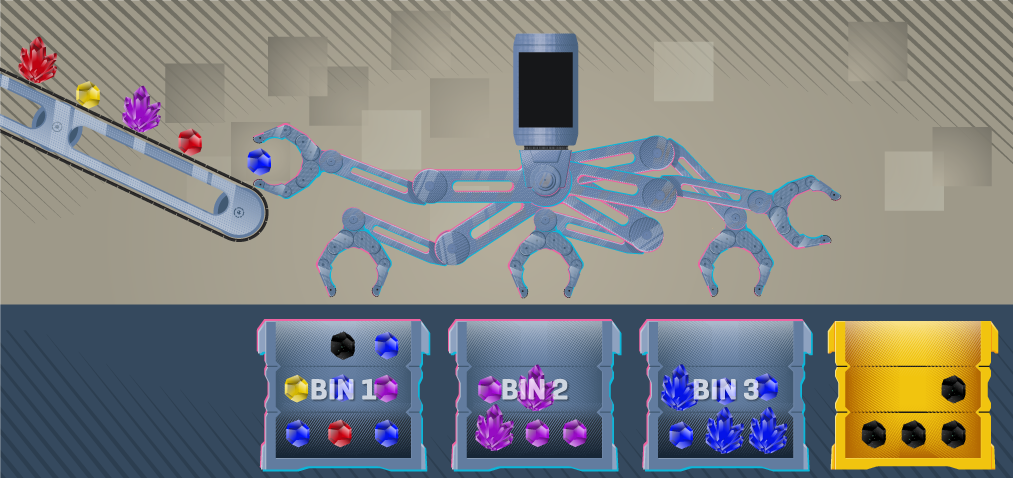
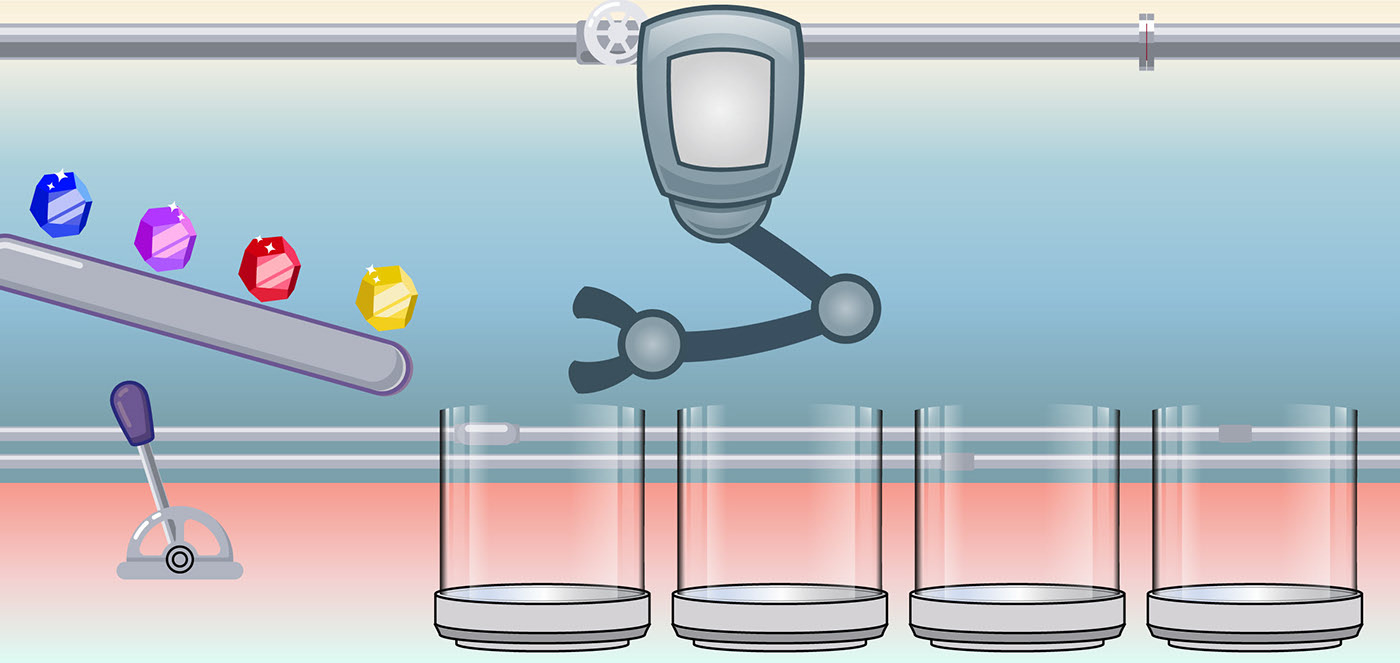
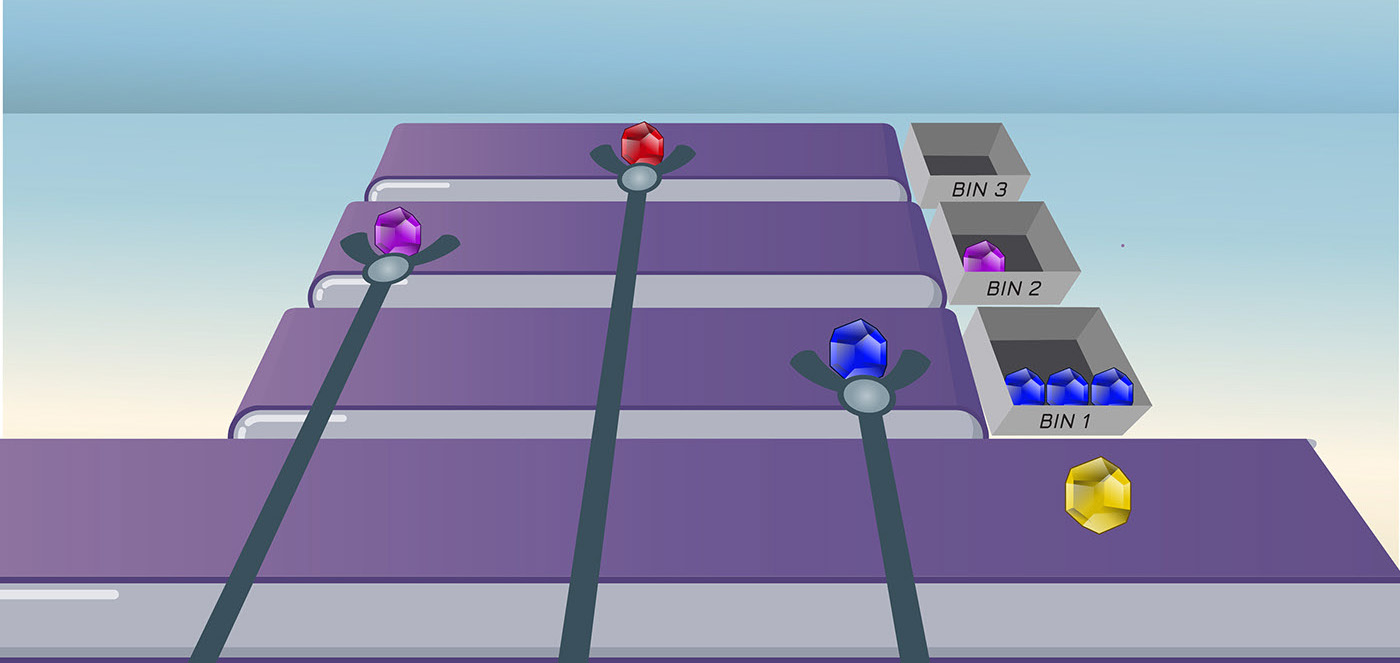
Gem Hopper moved through several testing phases with close support from the museum's research and evaluation team. What began as a side-scrolling game evolved into a top-view group activity, creating a more social, collaborative experience.
Process
Prototype. Observe. Learn. Refine.
Testing was an essential design tool. Concepts were sketched, prototyped, observed with real users, and refined based on behavior — not assumptions.
Outcome
An exhibition system that turns engineering into something visitors can see, touch, test, question, and understand.
The final experience brought together exhibition design, interactive technology, visual communication, fabrication, research, and universal design into one cohesive environment — reinforcing a lesson that has shaped my career ever since: the strongest design makes complex ideas accessible without making them simplistic.